
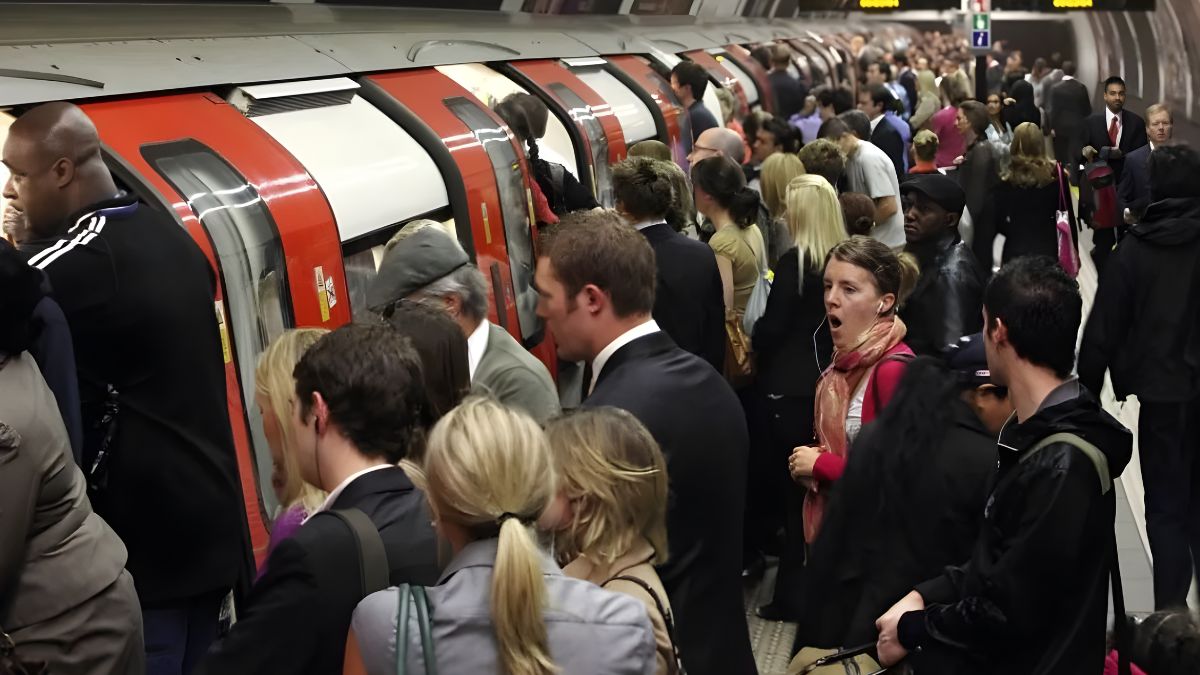
How the unique pressures of the London commute impact your authentic self
Every single morning, millions of people step onto the Tube, squeeze into overground carriages, shuffle across bridges, and join the vast, moving river of humanity that flows through London before 9am. And honestly, most of them barely think about what that daily ritual is doing to them — not just physically, not just mentally, but to something deeper. Something that sits right at the core of who they actually are. Because the London commute isn’t just a journey from A to B. It’s a daily performance. A daily negotiation between the person you are at home and the person the city demands you become before you’ve even had your first coffee. Let’s talk about that.
The Mask You Put On at the Station 🎭
There’s an unwritten code on the London Underground. You don’t make eye contact. You don’t talk to strangers. You stand on the right, you move down inside the carriage, and you absolutely do not eat a hot meal on the Central line. These aren’t laws. Nobody gave you a rulebook. But you know them instinctively the moment you enter the network. What’s actually happening here is fascinating, if slightly unsettling. You are, without realising it, suppressing your natural social instincts and replacing them with a socially approved version of yourself. A quieter version. A smaller version. Londoners call it being “professional” or simply “keeping to yourself.” Psychologists might call it a form of self-monitoring — adjusting your behaviour to match the expectations of your environment. To be fair, there are good reasons for this. A city of nine million people needs social rules just to function. But the question worth asking is this: when you do it every day, twice a day, for years — does the mask start to stick?
Stress, Speed, and the Erosion of Patience 😤
The average London commute takes around 74 minutes a day, round trip. That’s over six hours a week. More than 300 hours a year. And a significant chunk of that time is spent waiting for delayed trains, being pressed against strangers, checking your watch, and calculating whether you can still make your 9:15 if the Jubilee line is running at reduced capacity again. This kind of low-level, persistent stress has a very real effect on your personality — and not always in ways you’d expect.
| Commute Stressor | Psychological Effect | Behavioural Impact |
|---|---|---|
| Overcrowded carriages | Heightened anxiety, claustrophobia | Withdrawal, reduced social engagement |
| Frequent delays | Chronic frustration, helplessness | Shortened temper, reduced patience |
| Long journey times | Mental fatigue, decision fatigue | Reduced creativity, irritability |
| Noise and disruption | Sensory overload, poor concentration | Difficulty focusing after arriving |
| Financial pressure (fares) | Background stress, resentment | Work dissatisfaction, presenteeism |
Research consistently shows that commuting — particularly unpredictable commuting — is one of the strongest predictors of reduced wellbeing. It affects your mood, your relationships, and your sense of control. And when you feel out of control regularly, you start to lose touch with the parts of yourself that feel grounded and genuine.
Who Are You Actually, By the Time You Arrive? 🤔
Here’s something to genuinely sit with. By the time you walk through the office door, how much of what you’re feeling is actually you — and how much is a residue of the journey? You left home as yourself. Maybe a bit tired, maybe a bit rushed, but fundamentally you. Then forty-five minutes of signal failures, body heat, passive aggression, and the relentless ding of closing doors happened. And now you’re sitting at your desk with a tension headache and a sharper edge than you’d like to have. The problem is, most people don’t clock this shift. They just assume they woke up in a bad mood. They don’t realise the commute has essentially pre-loaded them with stress before the workday has even begun. That emotional residue colours your interactions, your decisions, your creativity, and yes — your authenticity. Because when you’re running on empty before lunchtime, you default to autopilot. And autopilot isn’t usually your best, most genuine self.
The Social Isolation Paradox 🫂
Here’s the strange irony at the heart of the London commute. You are surrounded by more human beings than almost anywhere else on Earth — and yet the entire system is designed to make you feel utterly alone. Nobody speaks. Nobody connects. You scroll your phone, you wear your headphones like armour, and you count the stops. Honestly, you could stand shoulder to shoulder with the same person for three years running and never learn their name. This isn’t just a quirky British thing. It’s a coping mechanism that has calcified into culture. And on the flip side, it has a genuinely corrosive effect on your sense of belonging. Humans are wired for connection. When you spend a significant portion of every day deliberately avoiding it, something quietly shifts. You become more guarded. More transactional. Less open. And those traits, if you’re not careful, don’t stay on the Tube. They follow you home.
Reclaiming Yourself on the Daily Commute ✨
None of this means you’re doomed. But it does mean the commute deserves more conscious attention than most people give it. Small choices matter enormously here. Choosing to read something nourishing rather than doom-scrolling. Stepping off one stop early and walking the rest, just to feel the city on your own terms. Taking your headphones out for five minutes and simply existing in the noise without fighting it. These aren’t grand gestures. They’re tiny acts of self-reclamation. The commute can actually be a rare pocket of unscheduled time in a city that never stops scheduling you. The key is deciding to use it with some degree of intention, rather than letting it use you.
5 FAQs About the London Commute and Your Identity ❓
Q1: Can commuting really change your personality long-term? Yes, genuinely. Chronic commuting stress has been linked to reduced agreeableness, lower emotional resilience, and heightened anxiety over time — particularly if the commute involves unpredictability and overcrowding.
Q2: Why do Londoners avoid eye contact on the Tube? It’s a combination of cultural conditioning, privacy norms, and the psychological need to create personal space in a physically cramped environment. It’s a coping mechanism, not rudeness — though it can absolutely feel like both.
Q3: Does the length of the commute matter for wellbeing? Significantly. Studies suggest that commutes over 45 minutes one-way are associated with noticeably lower life satisfaction. London’s average sits uncomfortably close to that threshold.
Q4: How can I protect my mental health during a long commute? Build micro-rituals into the journey — a playlist that genuinely lifts your mood, a podcast that engages your curiosity, or even just a consistent breathing practice to decompress before you arrive somewhere.
Q5: Is remote working the answer to all of this? Partially, yes — but not entirely. Remote workers often report feeling disconnected and professionally isolated. The commute has costs, but it also provides structure, physical movement, and a psychological transition between home and work life.